We’re Stronger Together
With your help, we can make ambitious innovations in clinical care and education for our community.

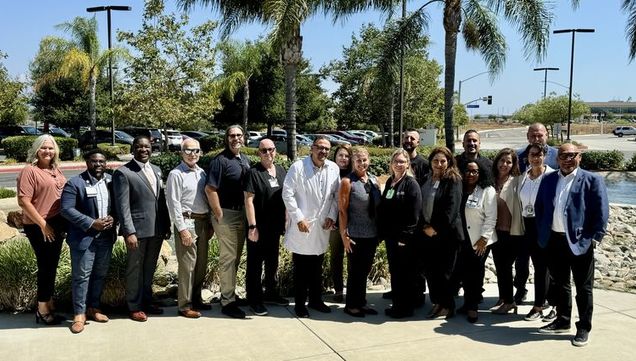
LLUMC and LLUMC-Murrieta received top awards for their high-quality care in stroke and diabetes management.
Loma Linda University Medical Center is the first hospital in the Inland Empire to earn The Joint Commission’s Gold Seal of Approval® and the American Heart Association/American Stroke Association’s Heart-Check mark for Advanced Certification for Comprehensive Stroke Centers.
When timing is critical you want a stroke center that is prepared to deliver the most advanced stroke care at any time and our recent designation proves we can do just that. From stroke prevention through stroke rehabilitation Loma Linda University Health is committed to caring for our community.
Providing world-class stroke care requires seamless collaboration among highly skilled specialists. Our comprehensive stroke team brings together experts from multiple disciplines to deliver coordinated, compassionate, and lifesaving care.
After a stroke, you may require rehabilitation after hospitalization to regain independence and quality of life. Our East Campus rehabilitation units are designed to support this critical phase of recovery in a beautiful and specialized environment. The campus features advanced equipment and tools, as well as dedicated staff who are passionate about helping you rebuild your health. Intensive therapy includes physical, occupational, and speech therapy, along with extensive education for families and the community. These specialized teams work closely with you to promote recovery and help you get back to daily activities.
Our advanced stroke nurses (ASNs) are a specialized group of critical care nurses with advanced training in stroke care. From the moment you arrive, ASNs play a vital role in coordinating care. They respond to every stroke activation, collaborating with neurology providers, neurointerventional radiologists, emergency personnel, and imaging teams to aid timely treatment for both ischemic and hemorrhagic strokes. Equipped with essential medications and supplies, ASNs remain at your side during acute treatment, procedures, and transfers to help ensure your quality of care.
Respiratory therapists are integral to stroke activations, performing rapid assessments and communicating critical findings to the care team. They provide expert airway management and manage ventilators during procedures and hospital transport. Each respiratory therapist receives annual specialized training in stroke protocols, helping ensure they can deliver expert respiratory care in a timely manner.
Our emergency department treats more than 75,000 patients annually, including some of our area's most critical cases. As a designated Level I trauma center, comprehensive stroke center, and STEMI center, the ED is staffed by highly trained professionals who excel in rapid assessment, stabilization, and coordination of care. Emergency staff are extensively trained to recognize stroke symptoms and promptly activate the stroke team, aiding quick diagnosis and treatment. Their expertise makes them an essential part of our stroke response system.
If you require critical care, our neuro medical critical care service provides 24/7 coverage. Our physicians, nurse practitioners, physician assistants, and resident physicians have advanced training in managing complex neurological conditions. This elite team delivers specialized interventions, participates in leading-edge research, and collaborates with national and international experts to help provide the highest level of care.
Our neurointerventional radiology team provides minimally invasive, image-guided treatments for conditions of the brain, neck, and spine. This highly skilled team treats both hemorrhagic and ischemic strokes, performing hundreds of emergency procedures each year — including thrombectomy, embolization, stenting, and angiography. Patients from across the region are transferred here for access to these highly advanced interventions.
Imaging plays a pivotal role in stroke diagnosis and treatment. When you arrive after a stroke event, you'll swiftly undergo brain and neck imaging that is reviewed immediately by our radiologists. This rapid image review is vital for your stroke team to make timely treatment decisions. Our expert radiology technologists will guide you through the process with skill and compassion.
Our critical care specialty team consists of highly experienced ICU nurses who respond to emergencies campus-wide, including stroke activations. CCST nurses assist with rapid assessment, stabilization, medication administration, and transport. They are also certified sedation nurses and can help you feel more comfortable during the imaging process. Their advanced skills and readiness make them key members of the stroke response team.
With your help, we can make ambitious innovations in clinical care and education for our community.